Steam, Patience and a Spare Towel: Giving Tired Knits Their Shape Back

Photo: handknitted wool jumper blocking flat on towels and foam mats on a kitchen table, natural light, pins and tape measure, via gray-wgcl-prod.gtv-cdn.com
By early November, the kitchen table has usually become a landing pad for everything: school letters, a half-cut pumpkin, the odd ball of yarn that never made it back to the basket. But give it a clean towel, a basin of lukewarm water and an afternoon, and that same table can become one of the most useful places in the house for your handknits.
Blocking is often spoken about as the final step of a new project. It is also, quietly, a form of care for the knits that have already done a few seasons. A jumper that has been worn under coats, washed in a hurry and draped over the back of a chair does not need to be thrown out or reinvented. It often just needs to be wet, reshaped and left alone for a day or two.
Why blocking belongs in November
As the light goes early and the cold settles in, wool starts to work harder. Cuffs stretch. Hems droop. A favourite cardigan begins to look less like a garment and more like a soft, familiar sack. None of this means the knitting has failed. Wool has memory, but it also takes impressions: the weight of a bag strap, the pull of a pocket, the way you always push up one sleeve.
Blocking is a gentle reset. It is not mending, exactly, but it sits close to mending in spirit. You are not trying to make an old knit look brand new. You are giving it back its own proportions, letting the stitches settle and the fibres relax. On a dark November afternoon, that feels like a small, sensible ritual: kettle on, radio low, wool in water.
The kit that earns its place
You do not need a dedicated craft room or a set of matching blocking boards. A kitchen table, or a clean patch of floor if the table is needed for tea, will do. Good light helps, but a lamp is fine.
What is worth gathering:
- A clean basin or washing-up bowl.
- A gentle wool wash. Nothing harsh, nothing with brightening enzymes if you can avoid it.
- Two or three clean bath towels, plus one old towel for rolling.
- Blocking mats, a clean yoga mat or foam play mats. A folded duvet cover over a spare bed also works at a push.
- Rust-proof pins, if your knit needs points held in place.
- A tape measure and your project notes, or a quick photo of the garment before washing.
- A spray bottle for stubborn edges.
- A drying rack or a flat surface with room around it.
- A fan or dehumidifier, if November is doing its damp thing.
A word on the radiator: it is not your friend here. More on that below.
Setting the station, slowly
Start by clearing the table properly. Wipe it down, then cover it with a towel or mats. If you are using mats, give them a quick rinse so no dust transfers to damp wool. Fill the basin with lukewarm water and a small squeeze of wool wash. Lukewarm means what your hands would call comfortable, not what a hot bath would call comfortable.
Submerge the knit and let it soak. Fifteen to twenty minutes is usually plenty for a jumper or cardigan. Do not agitate it. Do not hold it up by the shoulders when it is heavy with water. Press it gently under the surface, then leave it be. If the water turns cloudy, that is just the ordinary business of wool letting go of dust and oils.
Rinse if you need to, using water of the same temperature. Then lift the knit with both hands, supporting the weight, and press the water out against the side of the basin. Do not wring. Lay it on a clean towel, roll the towel up tightly and press or gently kneel on it. This is the closest thing to a spin cycle you should give most handknits.
Now lay the knit flat on your mats. Shape it to the measurements you noted, or to the size it used to be. Ease the stitches into line. Pin hems, cuffs and any points that want to curl. If you are blocking lace, pin more generously. If you are blocking a plain stocking-stitch jumper, less is more. Blocking is not wrestling. It is persuading.
Drying without radiators
Direct heat is the enemy of drape. A radiator can dry wool unevenly, leave it stiff and, in the worst cases, encourage felting or weaken the fibres. So can a hot airing cupboard if the garment is pressed against shelves. November already gives us enough sudden temperature changes without adding wool to the mix.
Instead, put the knit somewhere with moving air. A spare room with a window cracked open for ten minutes, a fan on its lowest setting, or a dehumidifier running nearby will do more good than any blast of heat. Turn the garment after a day if the underside is still damp. A jumper may take twenty-four hours; a thick cardigan or a woolly hat can take longer. If it is still cool and damp at the seams, give it another day. Patience is part of the method.
What different British fibres want
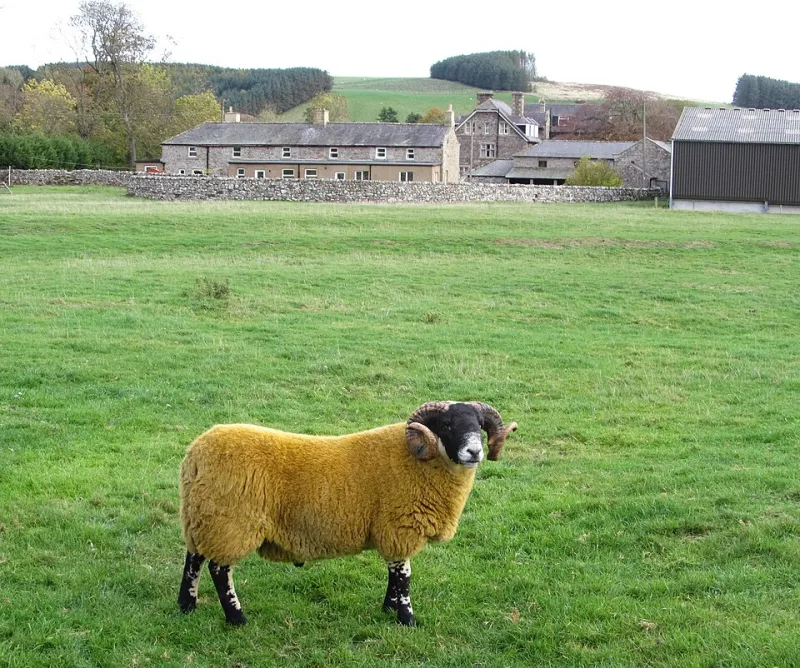
British wool is not one thing. A Shetland jumper, a Bluefaced Leicester shawl and a Wensleydale hat all behave differently in water, and it helps to know what you are handling.
Shetland wool blooms when washed. It may look a little fuzzier and softer after blocking, and that is normal. Shape it gently and avoid over-pinning. Bluefaced Leicester has a natural drape and a bit of weight when wet, so support it carefully and dry it flat. Longwool yarns such as Wensleydale have a lovely lustre; let them find their own line rather than stretching them hard. Alpaca and alpaca blends can be heavy when soaked, so never hang them to dry. Gentle wool washes and cool water suit most of these fibres, but always read the yarn label if you have it.
Superwash wools are more forgiving, but they are not invincible. They still benefit from a cool soak and a flat dry. If a knit is a blend, treat it according to the most delicate fibre in the mix.
The quiet part: reading the knit
Blocking gives you time to look closely at a garment you have been wearing without really seeing. You might notice a worn elbow, a loose button or a dropped stitch that has been waiting quietly for attention. You might find that the seams need a little reinforcing, or that the hem is fine and only needed a rest. This is the repair-adjacent part: not always fixing, but noticing.
And then there is the pleasure of the table itself. A clean towel, a pinned sleeve, the smell of damp wool and wool wash. The kitchen is warm. The light is low. The knit is doing nothing at all, which is exactly what it needs.
Here at Gathered Sheep Yarns, we like a project that asks us to slow down before the cold really settles in. Not every knit needs a full blocking station. But one well-loved jumper, given a lukewarm soak and a flat, quiet place to dry, can come back into the rotation with its shape and dignity intact. It will not be new. It will be yours again.