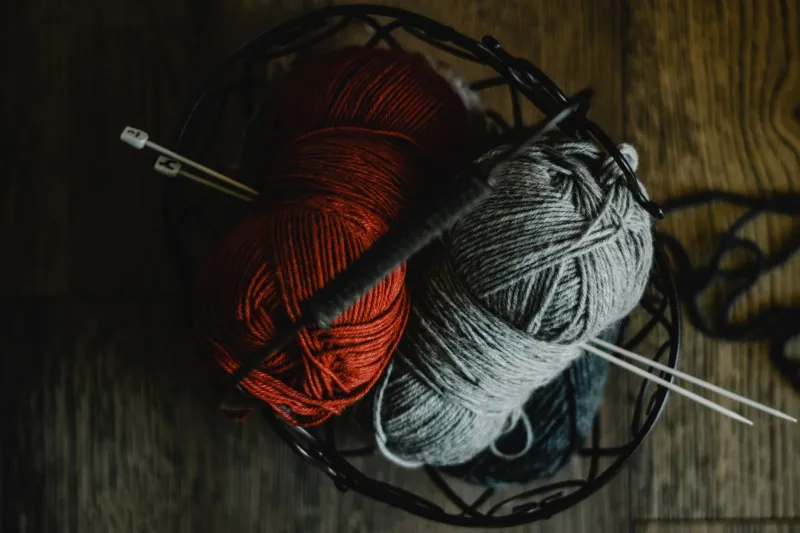
Wool's Second Draft: Five British Yarns Rewritten by Warm Water

There is a moment, just after you weave in the last end, when a handknit looks finished but doesn't yet feel finished. The stitches are a little tight. The fabric is a bit crisp. It has the shape of a garment but not quite the mood of one. Then it meets warm water, a clean towel and a drying rack, and something shifts. Not dramatically — this is wool, not a magic trick — but noticeably. The yarn relaxes into itself. The stitch pattern settles. The whole piece starts to move like cloth rather than like knitting.
This is the finishing bath: the first full soak after the ends are woven in. Some knitters call it blocking, though that word can sound more clinical than the process deserves. It is really a second draft. The first draft is what comes off the needles. The second is what comes back from the drying rack.
Why the first soak matters
Wool fibres have memory. They have been spun, plied, wound, knitted and pulled through loop after loop, and by the time you cast off they are holding a lot of tension. A gentle soak in lukewarm water with a pH-neutral wool wash lets those fibres relax. Scales on the surface of the wool can open slightly and then settle, which is why some yarns bloom into a soft halo while others smooth out. Plant fibres like linen behave differently again: they soften and drape rather than bloom.
The rules are simple. Use water at a consistent lukewarm temperature. Don't agitate. Don't wring. Don't hang a wet jumper on a line unless you want a garment shaped like a long sock. Roll the piece in a clean towel to press out excess water, then dry it flat, reshaping gently as you go. Keep it away from radiators and direct sun. That's it. The rest is patience.
West Yorkshire Spinners Signature 4ply
This is a workhorse with a soft side. Spun in Yorkshire from a wool and nylon blend, it comes off the needles feeling sturdy and slightly crisp — the kind of yarn that holds a cable or a slipped-stitch detail without fuss. After its first soak, the surface softens and the fabric relaxes into a more even hand. It doesn't lose its memory, though. The nylon keeps the elastic spring in the yarn, so socks and hats still hold their shape.
Care: cool hand wash with a gentle wool wash, rinse at the same temperature, press water out in a towel, and dry flat. Avoid fabric conditioner, which coats the fibres and dulls the wool's natural behaviour. A airing cupboard is fine once the piece is nearly dry, but a hot radiator is not.
Jamieson & Smith 2-ply Jumper Weight
Shetland wool has a reputation for being toothy, and this yarn earns it before washing. It feels dry and honest in the hand, with a lovely springiness that makes colourwork feel almost architectural. Then it takes a bath. The fibres bloom, the surface grows a soft halo, and small gaps in the colourwork fill in. It doesn't become cashmere. It becomes Shetland — warmer, softer, and more at ease with itself.
Care: lukewarm hand wash, a short soak, no agitation, and a flat dry away from direct heat. Because it blooms, resist the urge to over-handle it while wet. Shape it once, leave it alone, and let it dry slowly.
Garthenor Organic Preseli
A Welsh wool with a lovely dense, springy feel on the needles, Preseli starts out with plenty of body. After a soak it relaxes into drape without going limp. The fabric softens at the surface, gains a slight halo, and starts to move with you rather than standing away from the body. It is the sort of yarn that makes a cardigan feel like a favourite jacket after a few wears.
Care: gentle hand wash at a low temperature, no wringing, dry flat. Reshape the edges while damp — particularly cuffs, button bands and hems — because this is the moment to coax them into line. Once dry, a light press with a damp cloth and a cool iron can tidy any rolling edges, but keep the iron off the stitches themselves.
John Arbon Textiles Exmoor Sock
A UK-spun sock yarn with a smooth, tight twist, Exmoor Sock feels almost polished before washing. The first soak softens the surface and eases the fabric into a more even gauge. Stitch definition stays sharp, which makes it a good choice for textured socks and lightweight mitts, but the hand becomes noticeably gentler. It doesn't need to be treated like glass — it is sock yarn, after all — but it does reward a gentle wash.
Care: cool hand wash, no fabric conditioner, dry flat. If you are washing a pair of socks, squeeze rather than rub. For garments, support the weight of the wet fabric with a towel so the shoulders and neckline don't stretch.
Blacker Yarns Lyonesse DK
This one is a blend of merino and linen, spun in the UK from fibre that travels further afield, and it changes more visibly than the pure wools. Off the needles it can feel crisp, with the linen giving a dry, almost papery edge. After a warm bath, the linen relaxes and the merino softens around it. The fabric gains drape, the stitches plump up, and the whole piece feels less stiff and more wearable.
Care: cool hand wash, no wringing, dry flat and reshape while damp. Linen softens with repeated washing, so don't judge it after one soak. The second wash — the one after you have actually worn the thing — is where it really starts to feel like yours.
The second wash is the long game
The finishing bath is the dramatic one, but the second wash matters too. That is the wash after a few wears, when the garment has taken on the shape of your shoulders and the elbows have softened. It is less about transformation and more about settling in. Use the same principles: lukewarm water, gentle wool wash, no wringing, dry flat. Avoid the temptation to wash too often. Wool is naturally odour-resistant and often needs nothing more than a day on the line in fresh air.
A handknit is not truly finished when the ends are woven in. It is finished when it has been wet, shaped and dried — when the yarn has had the chance to become the fabric it was always going to be. The drying rack is part of the making. Put the kettle on, lay the jumper flat, and let the wool do the last bit of work on its own.