A Pound a Ball: The Gentle Art of Rescuing Someone Else's Yarn
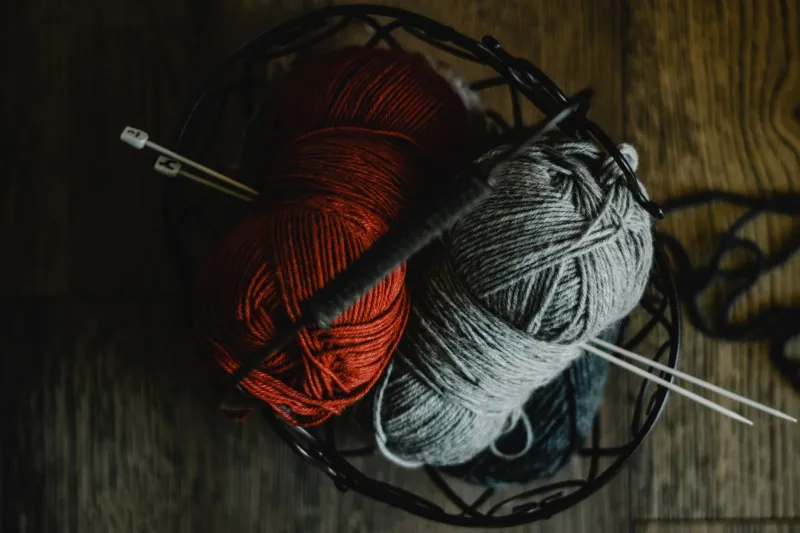
There is a particular kind of hope in a charity-shop basket of yarn. A few balls roll loose at the bottom, labels faded, shades slightly off, and you can almost see the jumper that never happened. Someone bought them with good intentions, then life got in the way. Now they are a pound a ball and waiting for a second chance.
Buying pre-loved yarn is slow fashion in its most literal form. It keeps good fibre out of landfill, stretches a budget, and adds an element of lucky-dip surprise to a Sunday afternoon. It also comes with risks: moths, felting, mystery fibres and the very real possibility of bringing home a bin bag that smells faintly of someone else's loft. The trick is not to be squeamish. The trick is to know what you are looking at.
Start where the yarn is already unwanted
Charity shops are the obvious first stop, but not all charity shops are equal. Local hospice shops and church-hall sales often have the most interesting baskets because the donations come from real stashes rather than house clearances. Oxfam and British Heart Foundation shops can be good too, especially in towns with a knitting tradition. Look beyond the craft shelf: yarn sometimes turns up with haberdashery, in the basket by the till, or in a box marked 'odds and ends'.
Car-boot sales are the wildcard. Go early, take cash, and be prepared to rummage. A seller who has inherited a cupboard full of wool may not know a merino from a meringue, which is exactly why you might find a bag of British breed yarn for the price of a coffee. Online destash listings on Facebook Marketplace, Ravelry and local selling groups are another route, though you will pay more for postage and you cannot squeeze the ball before you buy.
The hand test comes before the label
Before you read a single word on the band, pick up the yarn. Squeeze it. Good wool has a springiness that comes back when you let go. If the ball feels flat, compacted or stiff, it may have been stored under something heavy or washed badly. Look for the tell-tale fuzz of felting: a matted surface, fibres that have locked together, or a ball that has lost its individual plies.
Smell matters too. A faint woolly smell is fine. Damp, mildew, cigarette smoke or wet dog are not, unless you are prepared to wash everything thoroughly and perhaps still lose the battle. Check for breaks and knots. A couple of joins in a second-hand ball are normal. A ball that is more knot than yarn is not a bargain; it is a patience test.
Moths, eggs and the freezer trick
Moths are the great fear of every stash owner, and for good reason. Look for small holes, webbing, gritty dust or tiny cream-coloured eggs tucked into the folds of a skein. If you see any of these, walk away. It is not worth risking your own stash for a cheap ball of aran.
If the yarn looks clean but you want to be sure, freeze it. Put the balls in a sealed bag, press out the air, and leave them in the freezer for at least 48 hours. Take them out, let them come to room temperature, then freeze again for another 48 hours. This breaks the lifecycle of most common wool pests. After that, wash the yarn gently and store it with cedar or lavender, though neither is a guarantee. Vigilance is the real defence.
Mystery fibre, meet your match
Half the fun of rescue yarn is not knowing what it is. The label may be missing, or it may say something unhelpful like 'fancy yarn'. A small burn test can help. Cut a short length, hold it safely with tweezers over a sink, and light it. Wool smells like burning hair and leaves a crumbly black ash. Acrylic melts into a hard bead and smells chemical. Cotton burns like paper. Do not do this in the charity shop, obviously. Take a snippet home.
If you cannot face a burn test, wash a small sample in cool water with a gentle wool wash. Wool will felt if you agitate it; acrylic will not. A mystery fibre that survives a warm hand wash and a bit of squeezing is probably synthetic or a blend. That is not a disaster, but it does change what you can make. Acrylic is warm, hard-wearing and good for children's jumpers, but it will not block like wool and it pills.
Washing and re-skeining without drama
Most rescue yarn benefits from a wash. Wind it into loose skeins, tie them in at least four places with scrap yarn, and soak them in cool water with a no-rinse wool wash for fifteen minutes. Do not agitate. Do not wring. Lift the skeins out, press them between towels, and dry them flat away from radiators or direct sun.
Once dry, re-skein if the yarn is crinkly from being knitted and frogged. A swift is lovely, but the back of a chair works fine. Wind slowly and loosely. If the yarn is very kinked, a gentle steam over a kettle can help, but keep the yarn well away from the spout.
What is a rescue skein worth?
A fair price depends on fibre, condition and quantity. For a standard 50g ball of acrylic or a basic wool blend, a pound or two is reasonable. For pure wool, alpaca, silk or a named British breed, you might pay three to five pounds a ball, especially if the label is intact. A full bag of matching dye-lot yarn is worth more than a jumble of odds and ends.
Do not pay close to retail for yarn that has been stored badly, has no label, or is wound into tight, dusty cakes. And remember that charity shops are not wholesalers; the point is to support the cause as well as find a bargain. If you are buying a whole basket, ask politely whether they can do a deal. They usually can.
When to leave it on the shelf
Some yarn is not a rescue; it is a future headache. Leave anything that smells of damp or smoke, anything heavily felted, anything with obvious moth damage, and anything that has been wound so tightly it has lost all elasticity. Be honest about your time and your patience. A ten-pound bin bag of tangled acrylic is not slow fashion; it is a weekend of untangling you will never get back.
The best rescue skeins are the ones that ask a little of you and give a lot back. A faded ball of Shetland wool, a half-used cake of hand-dyed sock yarn, a bag of aran that someone's gran never got around to knitting. Wash it, wind it, cast on. The jumper that never happened might still happen, just not in the way anyone expected.