From Bonfire Night to Bluebells: One Sweater, Six Months, No Deadline
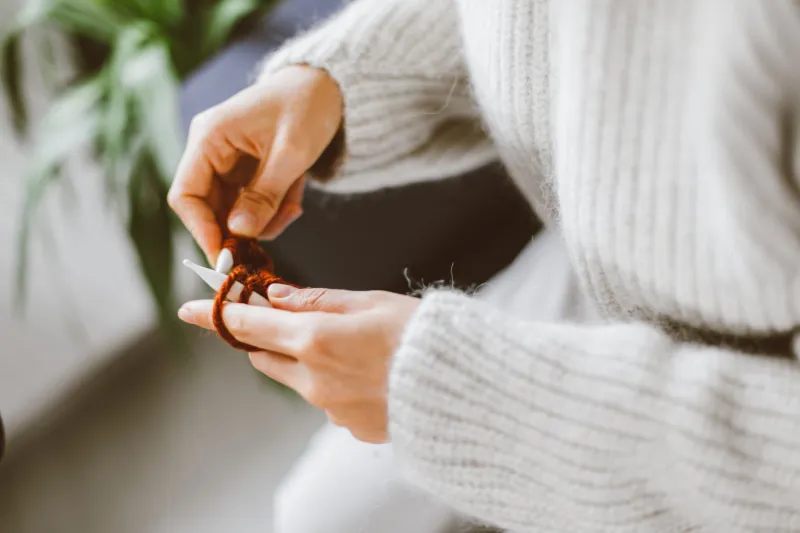
The clocks have gone back and the light is thinning by four. On a damp November afternoon, with the heating clicking on and a mug of tea going cold beside me, I cast on a sweater. Not for a birthday, not for a Christmas reveal, not for a knitalong deadline. Just one garment, in a UK-made wool, to be knitted slowly from Bonfire Night to bluebell season. Six months, more or less, with no schedule beyond the weather.
This is not a pattern review. It is a record of what happens when you let a single sweater keep pace with a British year: the good light, the bad light, the cold snap in February, the first warm afternoon in April when you suddenly realise you are knitting a garment you will not wear until October. Slow fashion is often described as a set of choices about fibre and manufacture. It is also a relationship with time.
Casting on when the dark arrives
November is indoor weather. The garden is finished, the evenings are long, and there is a particular pleasure in casting on something with sleeves while the rain films the windows. I swatched on a grey afternoon, washed the square, pinned it out, and waited until morning to measure it. That pause matters. A swatch measured damp and hopeful is not a swatch; it is a wish.
The first few weeks were body rounds. Nothing dramatic, just stocking stitch in a light worsted-spun wool, the kind that has enough bounce to feel alive on the needles without turning into a race. I knitted after supper, usually for twenty minutes, sometimes for an hour if the radio was good. By the end of November the hem was done and the first few inches of body were hanging from the needles like a small, soft flag.
The wool that has to work harder
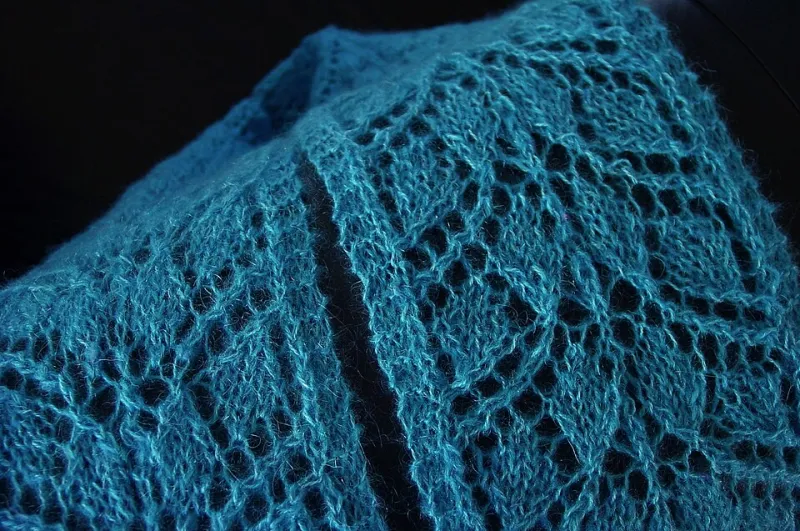
A British year is not one temperature. It is a damp bus stop, a stuffy office, a chilly kitchen, a bright but bitter walk, a mild afternoon that makes you regret your coat. A sweater meant to live across that range needs to breathe. For me that meant a woollen-spun yarn with some loft, a gentle halo, and a label that told me something about the breed and the mill. I looked for British wool with a bit of character rather than a yarn that felt like plastic in the skein.
Weight matters as much as fibre. A heavy aran can be glorious in January and unbearable in a overheated shop by March. A very fine 4-ply is elegant but can feel thin on a raw day. A light worsted or DK, knitted at a gauge that gives a fabric with some substance but no stiffness, sat in the useful middle. I bought enough skeins from the same dye lot to finish the whole garment, because a six-month sweater should not depend on a later batch matching the first.
The test I kept coming back to was simple: could I imagine wearing it over a shirt in November and on its own in April? If the answer was no, the yarn was not earning its place.
Pace, not pressure
Six months sounds generous until you count actual knitting hours. Most of us do not have whole evenings free, and the ones we do have are not always suited to counting stitches. My pace was unglamorous: a few rounds on weeknights, a longer session on Sunday, and a few days off when work was busy or I simply could not face the same grey-purple row again.
What helped was a weekly marker rather than a daily target. One repeat of the body pattern per week was enough. If I missed it, I did not try to catch up in a panic; I just picked up where I had left off. The sweater stayed in a basket by the chair, visible but not accusatory. A project that is always out is easier to return to than one folded away in a cupboard with the needles still in it.
There is a useful lesson here for anyone who associates slow making with saintliness. Slow does not mean steady every single day. It means the garment has room to wait.
Fitting in real time
Knitting a sweater over months gives you something a weekend project cannot: time to try it on while it is still changeable. I put the body stitches on waste yarn at the underarm and tried it on over a shirt in daylight. I did the same at the waist, and again before the ribbing. Each time I looked for the same things: does it pull across the back, does the hem sit where I will actually wear it, are the armholes high enough to move in but low enough to layer over a fleece?
Positive ease is personal. I wanted around five centimetres for a jumper that would go over a shirt but still feel like a sweater rather than a tent. If you want a closer fit, choose less; if you want a proper cosy layer, choose more. The important thing is to decide with the garment on your body, not with a number in your head. Blocking will change the fabric, too, so wash your swatch and trust what it does.
February, the honest month
February is where the romance goes out of a six-month sweater. The light is returning, but the cold has settled in, and the body seems to have been on the needles since the beginning of time. This is the month when a deadline would have made me knit badly, and when no deadline made me put the project down for ten days.
I knitted a hat instead. It was small, bright, and finished in an evening. Then I went back to the sweater. The break did not delay the garment in any meaningful way; it stopped me resenting it. By the time the sleeves began, the sweater felt familiar again, less like a task and more like a piece of furniture in my week.
Spring, and the last rows
March brought the first properly light evenings and the sleeves. April brought the ribbing and the quiet anxiety of the bind-off. In May I blocked the sweater on a towel in the shade, left it for two days, and wore it to a bluebell wood on the first cool enough morning. It was not a winter sweater or a summer sweater. It was a British-year sweater: light enough for a mild day, warm enough for the walk there, and soft enough to wear against the skin when the sun came out.
What the sweater taught me
A long project is not automatically a virtuous one, and a quick one is not automatically shallow. What the six-month sweater gave me was a different kind of attention: to the light I was knitting in, to the way the wool behaved after washing, to the fit at the underarm, and to the simple fact that clothes take time. If you fancy trying one, keep these notes close.
- Choose yarn for a range of temperatures, not one forecast.
- Swatch, wash, and wait before you commit.
- Plan two or three try-on points while the garment can still change.
- Use weekly markers instead of daily targets.
- Let the project rest without treating rest as failure.
The sweater is now folded in the drawer with the others. It has a small pull at the cuff where I caught it on a gate, and I will mend that when the winter comes round again. That feels right. It was made across a year, and it will be worn across the years after it.