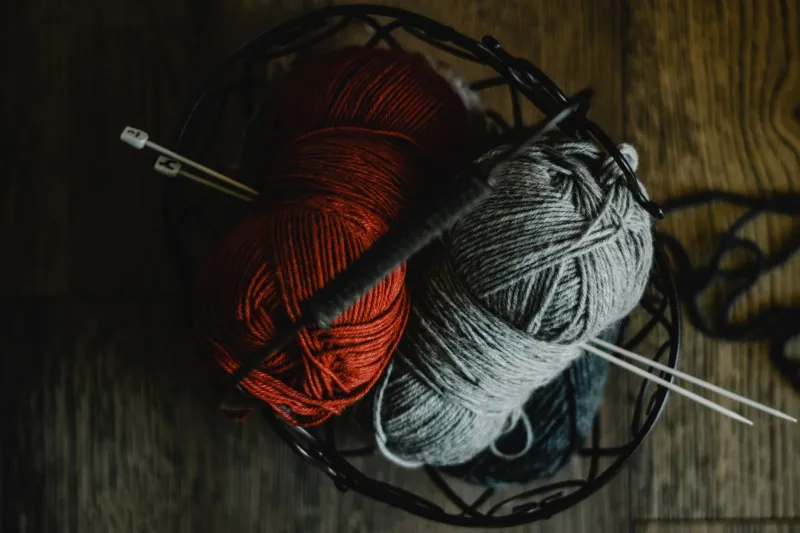
What I Want From Wool at 7:42 on a Tuesday
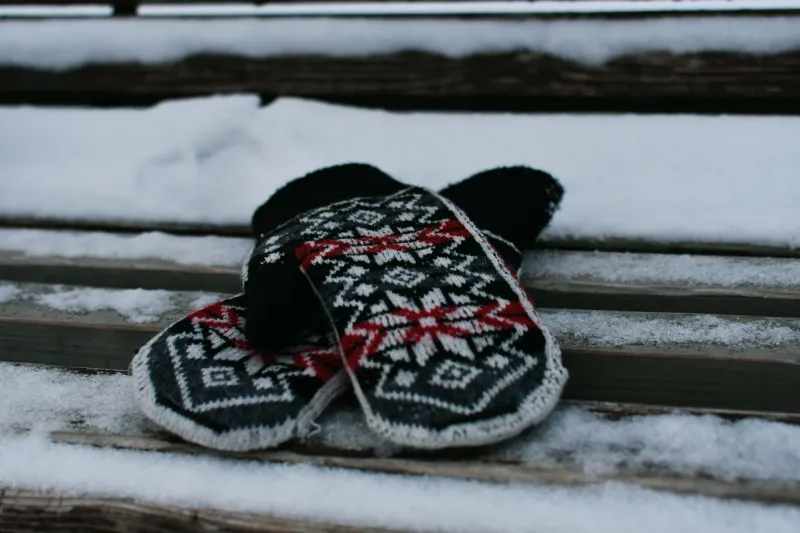
At 7:42 on a wet Tuesday, nobody cares how a yarn looks on a styling table. They care whether the hat stays on in a gust, whether the cowl has gone clammy under a coat collar, and whether the gloves are dry enough to pull on again tomorrow. The bus shelter test is simple: does the knit work in the life you actually lead, between the front door and the office radiator?
The test is not the photoshoot
A commute is a small weather system. There is the damp pause at the stop, the diesel-and-rain smell, the shuffle forward when the bus finally appears. There is the overheated carriage, where your coat becomes a portable sauna and your scarf starts to feel like a hot flannel. There is the bag strap sawing at your shoulder, the pocket that collects receipts, the radiator at the other end that turns wet mitts into stiff little boards if you are not careful.
That is a far better test of a yarn than a soft-focus photograph. A good commuting knit has to be warm when it is cold, breathable when the heating is up, sturdy enough to survive friction, and forgiving enough to dry overnight without turning into felt. It also has to be pleasant at the neck, because a scratchy scarf on a packed train is a special kind of regret.
Decide what your journey is actually asking
Not every commute makes the same demands. If you stand at an exposed stop for fifteen minutes, you want density and wind resistance. If you are on a warm train for half an hour, you want something that breathes and can be pulled off without a wrestling match. If you walk or cycle, you want a hat that grips, mitts that articulate and a cowl that does not flap into your face like a flag.
In other words, buy for the route, not for the fantasy of the route. A fluffy, loose-spun yarn may feel lovely in the shop, but it will not enjoy a daily argument with a rucksack strap. A dense, hard-wearing wool may feel businesslike on the needles, but it will earn its keep on a wet platform.
British yarns that behave on the way to work
Bluefaced Leicester is the obvious first stop for anything next to the skin. It is soft, warm and has a bit of drape, which makes it a good candidate for a cowl that sits under a coat collar. It is not indestructible: under a bag strap or at the thumb of a mitt, a loosely spun BFL can pill and look tired quite quickly. Knit it a little firmer than you would for a shawl and it will hold up much better.
Shetland wool is the commuter's quiet hero. It is light, warm and springy, with enough texture to feel like proper wool rather than a cloud. It can have a faint prickle, so it is not always the first choice for a delicate neck, but it makes excellent hats and mitts. A Shetland watch cap has a lovely habit of staying put without clamping your forehead, and the fibres cope well with repeated wear.
Romney is the sturdy option. It feels more workmanlike in the hand, with a firmness that suggests it has opinions about weather. That is exactly what you want in an outer hat, a mitt or a cowl that will be stuffed into a coat pocket. It may not be the softest thing you own, but it will take a beating and keep its shape. For anyone who commutes by bike or walks a windy mile to the station, Romney is worth a serious look.
Jacob, Welsh mule and other British breed blends can be brilliant too, especially when you want a tweedy, lived-in look. They often have a bit of bite, so think of them for mitts, hat brims and outer layers rather than a cowl for a sensitive neck. Corriedale blends sit somewhere in the middle: dependable, smooth enough for most wearers and happy in everyday ribbing.
Alpaca is warm and soft, but a pure alpaca hat can droop in the damp and stretch out of shape. A wool-alpaca blend can be lovely for a cosy cowl, provided the wool content gives it some memory. It is not the yarn I would choose for gloves that need to dry by morning.
Hats: the wind tunnel test
A commuting hat needs a brim that grips and a crown that does not leave a red line across your forehead. Ribbing is your friend here. A Shetland or Bluefaced Leicester DK worked at a firm gauge makes a hat that is warm without being bulky under a hood. If you want extra wind resistance, choose a denser fabric rather than a thicker yarn. A loose, airy hat may look romantic, but it will lift off at the bus stop like a pigeon with somewhere to be.
Cowls: the neck's honest reviewer
A cowl beats a scarf on most commutes because there are no ends to tuck, trail or dip into coffee. For a close-fitting cowl, BFL or a soft wool blend is the kindest choice. For a looser, drapey cowl, a Shetland or Corriedale blend gives warmth without too much weight. Avoid anything too fuzzy if you will be wearing it under a coat collar; halo has a way of migrating onto dark wool coats and staying there.
Mitts and gloves: the overnight drying test
This is where the bus shelter test gets strict. Wet wool can be perfectly warm while you are wearing it, but it still has to dry by morning. Thick, densely knitted mitts in Romney or Shetland are a sensible bet. Long cuffs keep the wind out and stop the gap between glove and sleeve from becoming a small arctic inlet. Fingered gloves are more elegant, but mitts are warmer for most people and much easier to dry on a radiator without turning the fingers into little woollen straws.
Knit two pairs if you can. One on the hands, one on the drying rack. It sounds excessive until the first properly wet week, when you realise it is simply forward planning.
The bus shelter verdict
There is no single best commuting yarn, just as there is no single best commute. If your journey is damp and standing, lean towards Romney, Shetland and firm woollen spins. If it is warm and crowded, choose something softer and more breathable next to the skin. If your gloves are the weak point, knit them densely, add long cuffs and accept that the drying rack is part of the pattern.
The knit that survives the 7:42 is not the one that photographs best. It is the one that is still doing its job when the bus is late, the rain is sideways and the only warm thing left in your day is the wool you made yourself.