The Fifty-Hour Jumper: A Fair Ledger for Handknits
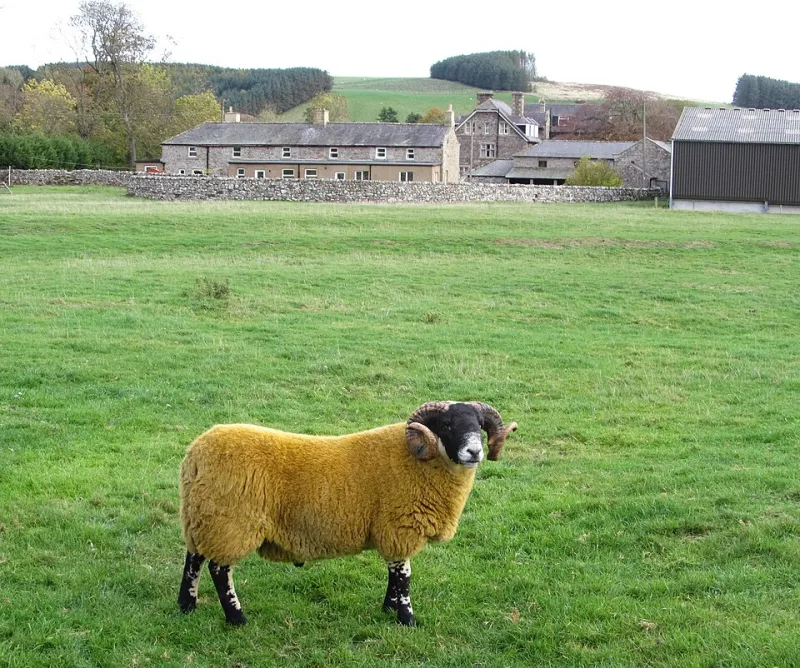
Photo: Gordon Hatton , CC BY-SA 2.0, via Wikimedia Commons
There is a question that turns up at nearly every knit group, usually just after someone has admired a finished jumper and then asked how much it would cost to buy one. The maker laughs, says something about not charging for her time, and the conversation moves on. But the question deserves a proper answer. Not a defensive one, not a joke about being slow, and certainly not a comparison with the high street. A handknit jumper has a ledger behind it, and reading that ledger can change how we value our own work without taking a single thing away from the pleasure of making.
Let us follow one jumper. Not a fancy one. A plain crew neck in a mid-brown British wool, around 600g of DK, knitted at a comfortable gauge. It has a little shaping, a ribbed neck, and enough ease to wear over a shirt. The kind of jumper that gets worn until the elbows go thin.
It begins with a fleece, not a price tag
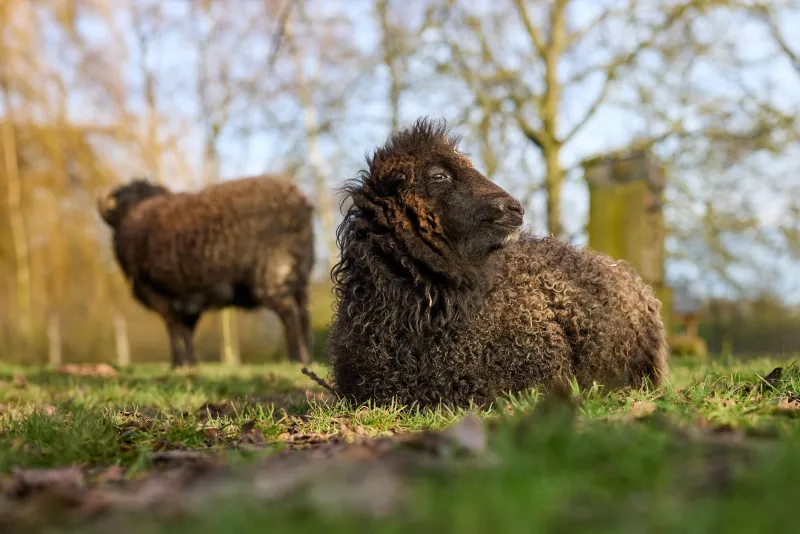
Long before there is a skein, there is an animal, a shearer, and a fleece on a sheet. A raw fleece suitable for a jumper might cost anywhere from £8 to £30 depending on breed, micron, staple length and how well it has been skirted. Let us say £18 for a good half-breed fleece that will eventually yield enough yarn for our jumper, allowing for loss during washing and carding.
That fleece does not walk itself to the mill. Scouring, carding and spinning are skilled processes, and small UK mills charge accordingly. For 600g of finished DK, a batch spin might add £45 to £60. Dyeing, whether in a semi-solid or a gentle heathered shade, adds another £10 to £20. Suddenly the wool is not a cheap raw material. It is a small supply chain of expertise.
By the time our 600g of yarn is wound into skeins, it might retail at £90 to £120. That is not greed. It is the cost of keeping old machinery running, paying skilled mill staff, and producing in quantities small enough that a jumper can still feel personal.
The skein on the shelf
If a knitter buys that yarn rather than processing a fleece, the materials line is easy to see. Six 100g skeins at £15 each comes to £90. Add a pattern at £7. Add a little for swatching, because no one should knit 600g without checking gauge. The materials are now around £100 before a single stitch is made.
This is the part everyone understands. It is the next part that gets awkward.
The hours you do not see
A plain jumper at a comfortable DK gauge might take 40 to 60 hours. Let us be moderate and say 50 hours. That includes swatching, checking the maths, knitting the body, joining the sleeves, picking up the neck, weaving in ends, and blocking. It does not include the years of practice that made those stitches even.
If the maker charged £12 an hour, the labour would be £600. That is not a luxury rate. It is below many freelance and trades rates, and it is a fair starting point for skilled handwork. Add the materials and the jumper is already at £700. Add studio overheads, needles, wear and tear, packaging, and a little for the admin of selling, and you are nearer £750.
Here is the same jumper as a simple ledger:
| Item | Estimate |
|---|---|
| Fleece, skirted | £18 |
| Scouring, carding, spinning | £52 |
| Dyeing | £14 |
| Pattern design and testing share | £8 |
| Maker's time, 50 hours at £12 | £600 |
| Overheads, tools, packaging | £20 |
| Photography, listing, admin | £35 |
| Total | £747 |
You can argue with any line. Maybe the yarn was bought in a sale. Maybe the maker is faster. Maybe the pattern was a freebie. But the shape of the ledger stays the same: the wool is rarely the expensive part. The hours are.
Why the shop price looks different
If that jumper is sold through a shop, a gallery or an online marketplace, the maker does not keep the full £747. There are card fees, platform fees, packing materials, postage, possibly VAT, and sometimes a wholesale margin if a shop is involved. A price that looks high to a customer may still leave the maker with less than the hourly rate in our ledger.
This is why comparing a handknit with a machine-made jumper is not really a fair comparison. They are different objects made in different economies. One is produced in minutes by a machine and sold at a volume that spreads costs across thousands of units. The other is produced in hours by a person, often in a small room, with a kettle nearby.
What this means for gift knitting
Most of us are not selling. We knit for ourselves, for family, for friends who have admired our work. You do not need to hand your sister an invoice with the birthday card. But knowing the value of what you make is still useful. It helps you choose projects carefully. It helps you say no to the endless request for a jumper in a colour you hate. It helps you accept that a handknit is a substantial gift, not a small token.
There is a middle path between undercharging and turning every jumper into a business case. You can give your work freely and still call it what it is: fifty hours, a fleece, a mill, a dyer, a pattern, and a pair of hands. The joy is not diminished by the arithmetic. If anything, the arithmetic makes the joy more honest.
A kinder way to price
If you do sell, start with the true cost. Add your materials, your hours at a rate you can live with, your overheads, and a small margin for the unexpected. Then decide what you are willing to compromise on. Maybe you use a less expensive yarn. Maybe you simplify the pattern. Maybe you knit only to order and take a deposit. None of that is a failure. It is just honest making.
And if you are buying a handknit, ask a gentler question than why it costs so much. Ask what went into it. The answer will usually include a fleece, a mill, a dye pot, a pattern, and a person who chose to spend fifty hours making something warm. That is the real cost, and it is worth every line.