Stewards, Schedules and Second Places: A Knitter's First Village Show
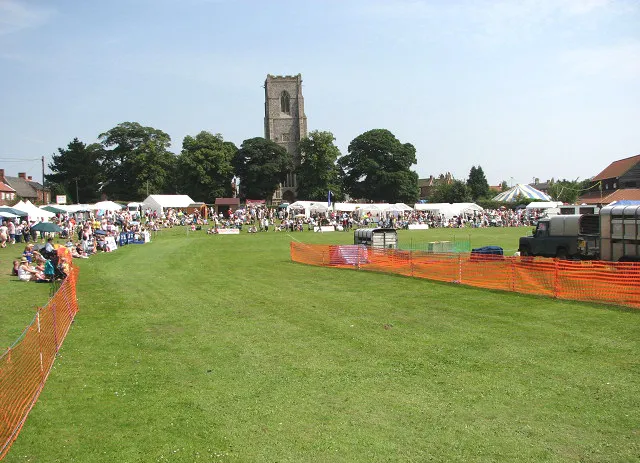
Photo: Evelyn Simak, CC BY-SA 2.0, via Wikimedia Commons
There is a particular smell inside a village show marquee on the morning of judging: damp grass, hot urn, a faint whiff of vinegar from the pickle classes, and underneath it all, lanolin. Somewhere along the trestle tables, between the marmalade and the giant onions, your knitting is lying flat on a white paper doily with a small card beside it bearing a number and nothing else. No name. No explanation. Just the thing you made, waiting to be looked at properly.
That card is the whole strange bargain of entering a show. For a few hours your jumper, your socks, your slightly wonky tea cosy is judged entirely on its own merits, by someone who does not know you and does not care how many evenings it took. It is terrifying. It is also, I have come to think, one of the most useful things a knitter can do.
Read the schedule like a pattern
The schedule — that thin, slightly photocopied booklet of classes — is where most first-timers go wrong. We skim it, pick the class that sounds closest, and then discover on the day that entry number 42 was for 'a knitted garment in double knitting, not exceeding 200g' and ours is aran weight and weighs considerably more than a bag of sugar.
So read it slowly. Note the yarn weight, the size restrictions, whether they want the item made from a commercial pattern or your own design, whether they want it blocked or unblocked, and the closing date for entries. Most shows charge around 50p to a pound per class, and many will let you enter two or three classes if the pieces are genuinely different. A good steward will answer questions by email in the week before, and they are almost always delighted to be asked.
Choose a category where your piece can actually shine. If your strength is colourwork, don't bury it in a 'plain garment' class. If you have a beautifully finished pair of socks with a neat Kitchener toe and grafting you are proud of, there is often a small accessories class that will reward exactly that.
What the judge is actually looking at
We imagine judges as stern arbiters of taste. In reality, most are experienced makers, often from a local guild or a neighbouring W.I., working through sixty entries before lunch with a clipboard and a cup of tea. They are looking for a handful of things, and almost none of them are about fashion.
Finish comes first. Ends woven in properly, not stabbed back through the fabric at the last minute. Seams that sit flat and match at the underarm. A cast-on edge that doesn't flare. Buttonholes that are the same size as each other. Tension — that word again — even across the row, without a visible change of pace where you put the work down.
Then there is suitability: does the yarn suit the garment, does the garment suit its stated purpose, has it been blocked to shape rather than left as it fell off the needles? A jumper that has been gently washed and dried flat will always read better than one that hasn't, even if the knitting is identical.
And then, quietly, there is ambition. Judges notice when a maker has tried something. A tricky cable that has been charted carefully, a colourwork motif that matches at the join, a hem turned properly. You do not need to be brilliant. You need to have cared.
Decoding the little card of comments
When you go back in the afternoon, there will be a handwritten note. Sometimes it will say 'highly commended' and you will float home. Sometimes it will say something like 'good tension, sleeves set in slightly unevenly' and you will feel briefly bereft. Both are gifts.
Read the comments as though they were written about someone else's knitting, because in a sense they were. The judge saw a garment, not your winter. Keep the card. Photograph it. Then, when you get home, lay the piece out on the table and look for what they saw. Nine times out of ten you will find it, and you will never make that particular mistake again — or you will make it deliberately, because now you know why it matters.
The thing not to do is argue. The steward has heard it all before, and the judge has already moved on to the chutney. Take the note, say thank you, and buy a slice of cake.
The table is the prize
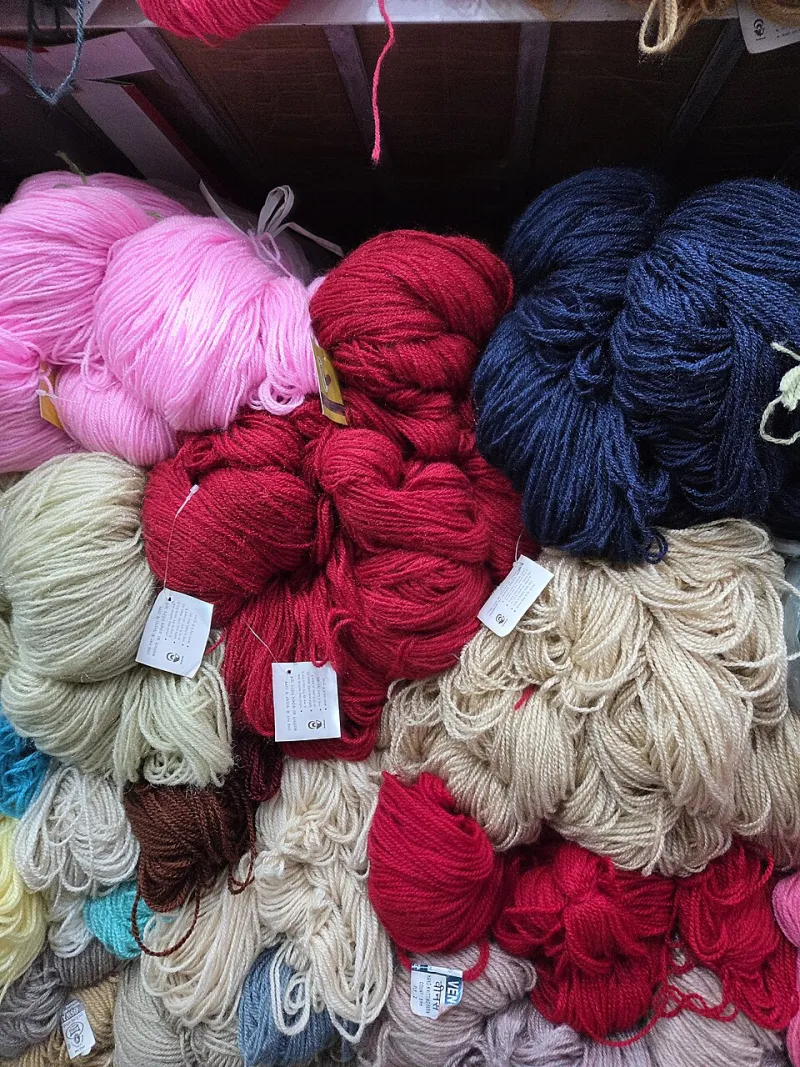
Here is what nobody tells you about village shows: the competition is the smallest part of the day. The real event is the table itself — rows of wool in every colour, made by people from three villages over, some of whom have been entering the same class for thirty years. There is a woman who always wins the baby cardigan class and a teenager who has started entering the cushion cover category and is quietly getting very good.
You will stand next to strangers and talk about yarn weight for twenty minutes. Someone will tell you where they buy their Shetland. Someone else will peer at your seams and say, kindly, 'you want to try mattress stitch from the right side'. You will leave with a rosette or you won't, and either way you will leave with a name or two and a note in your phone about a wool shop you have never visited.
That is the quiet pride of it: not the ribbon, but the fact that your work sat on a table with everyone else's and was seen. Next year you will read the schedule in February. You will knit with a little more care. And you will put your name down again, because the card with the number on it is, in the end, an invitation.