The Parcel That Smells of Lanolin: A Practical Guide to Swapping Yarn by Post
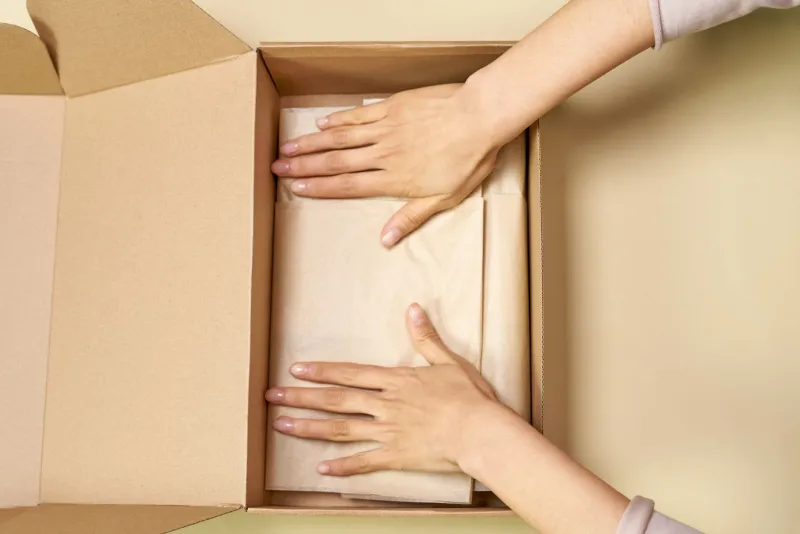
The postman knows. He has to, because the parcel is soft at the corners and smells faintly of lanolin. Inside, under a fold of recycled tissue, is a skein you have been promised for weeks: a colour you chose from a photo, wound by someone you have never met, with a handwritten note tucked alongside. This is the quiet theatre of the yarn swap by post, and it is one of the most generous habits in the making community.
A swap is not really a transaction. It is a small exchange of trust, taste and woolly goodwill. But it still has to get from one doormat to another without being squashed, overpaid for, or lost in a sorting office. Here is a gentle, practical guide to sending a skein through Royal Mail without losing the personal side of yarn culture.
Start with the skein, not the box
Before you reach for the tape, make a little yarn passport. A small card or sticky label should carry the essentials: fibre content, weight, metreage, dye lot, and washing instructions. If you have wound the skein, say so. If it came from a smoke-free home, or has been stored with lavender, that is useful too. This matters because the person receiving it may be planning a garment, and a mystery skein is charming until you need to know whether it will felt in the machine.
A yarn passport also protects the swap. If the skein is a discontinued colour or a single batch, the recipient knows what they are working with. It is a small courtesy that turns a parcel into a proper exchange of knowledge.
The kit: what actually protects wool
You do not need much. A kitchen scale, some recycled tissue paper, a sturdy mailer or a small box, a roll of paper tape, a pen and a card. That is the whole kit. A few extras help: a length of waste yarn to tie the skein loosely, a cedar block or a sprig of dried lavender, and a compostable mailer if you want to avoid plastic.
A few things to avoid. Do not vacuum-pack a skein. It crushes the loft and leaves creases that take weeks to settle. Do not seal wool in a bin bag with no breathing room. Do not use elastic bands directly around the skein, as they perish and leave marks. Tie with waste yarn instead, loosely, so the skein holds its shape without being strangled.
If you are sending a box, line it with tissue and fill any gaps with more paper. Wool is resilient, but a skein rattling around in a too-large box will arrive looking tired. A snug parcel is a happy parcel.
Weighing and sizing without guesswork
Royal Mail prices by weight and size, so a kitchen scale is your friend. A typical 100g skein plus tissue and a mailer usually lands somewhere between 140g and 180g. Two skeins might be 250g to 350g. Weigh the whole parcel, not just the yarn, and add a little buffer for tape and labels.
Check the current size and weight limits on the Royal Mail website or at the counter before you seal anything. Small parcels have maximum dimensions, and if you stray into medium parcel territory the cost can jump. If you are sending several skeins, consider splitting them into two parcels rather than one heavy box. It is often cheaper and kinder to the yarn.
Address the parcel clearly, write your return address on the back, and take a photo of the label before posting. That photo is your quiet insurance policy if anything goes astray.
Choosing a service that matches the swap
For a friendly swap between people who know each other, Second Class is often enough. It is slower and cheaper, and the anticipation is part of the pleasure. First Class buys a little speed but not a guarantee.
For a first-time swap, or a parcel carrying a precious skein, consider Tracked 48 or Tracked 24. You get proof of posting and a trail to follow, which takes the worry out of sending wool to a stranger. Signed For is useful if the recipient is often out, though it does mean a trip to the sorting office if they miss the knock. Special Delivery Guaranteed is there for the rare, high-value swap, but for most skeins it is overkill.
If you are swapping within the UK, these services cover almost every situation. For international swaps, you will need a customs form and a bit more patience, but the same packing principles apply.
Keeping costs fair between swappers
The fairest swaps are agreed before the parcel is packed. A simple rule is that each person pays their own postage. If one parcel is much heavier or going further, talk about it. You might split the difference, or the sender of the lighter parcel might tuck in an extra mini skein to balance the value.
Try not to turn the swap into a negotiation over pennies. The point is the exchange, not the exact maths. If you are sending a surprise, say clearly that no match is expected. A short message before posting, with the service you have used and the tracking number if you have one, is worth more than a perfect calculation.
The personal bit: notes, extras and the doormat thrill
This is where a yarn swap becomes a story. A handwritten note costs nothing and means everything. Tell the recipient why you chose this colour, or what you nearly made with it, or which sheep breed you have been reading about. Tuck in a mini skein, a stitch marker, a tea bag, or a pressed leaf from your garden. One swapper I know always includes a square of dark chocolate, wrapped in foil, with a note that says: 'For the waiting.'
The doormat moment is real. There is a particular thrill in a parcel that is not a bill, not a delivery for someone else, but a small woolly gift from a fellow maker. It smells of lanolin, or lavender, or the inside of a favourite drawer. It has handwriting on it. It is slow fashion arriving at speed.
A checklist before the postbox
- Photograph the skein and its label before wrapping.
- Weigh the packed parcel and check the current Royal Mail size guide.
- Write the address clearly and add your return address.
- Include a yarn passport and a handwritten note.
- Secure the skein with waste yarn, not elastic.
- Use tissue and paper to fill gaps, and avoid vacuum packing.
- Choose a service that matches the value and the relationship.
- Share the tracking number if you have one.
- Take a photo of the label and keep your proof of posting.
Then walk to the postbox, or hand it over the counter, and enjoy the quiet knowledge that somewhere, in a day or two, someone will find a soft parcel on their doormat and smile before they even open it. Slow stitches, warm stories, and sometimes a brown paper parcel with a skein inside.