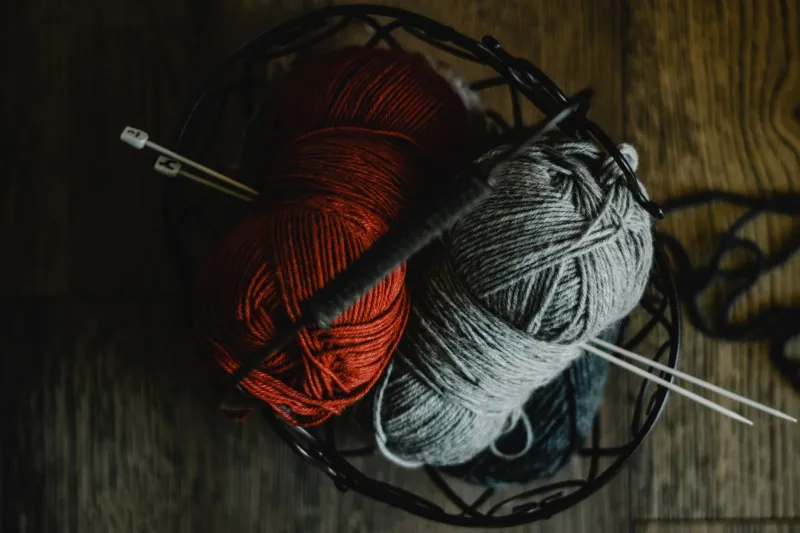
After the Last Dye Lot: A Gentle Plan for a Yarn You Can’t Rebuy
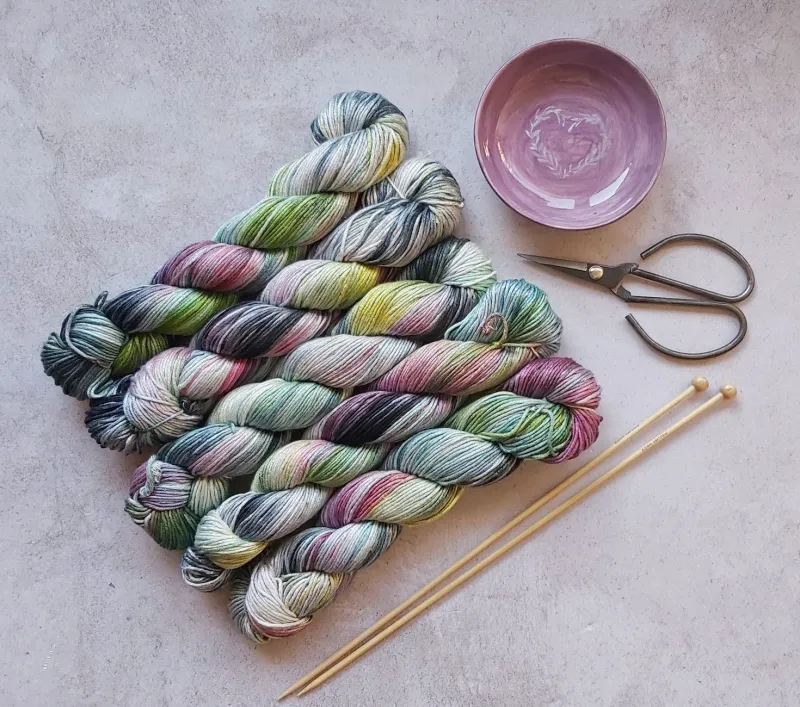
There is a particular kind of quiet that follows the words “last few skeins” on a yarn shop’s website. You click through anyway, as if the page might have made a mistake. Then the colour you have been saving for a jumper, or a hat, or absolutely nothing in particular, slips into the past tense. The dye pot is empty. The dyer has moved on to new shades. And you are left holding a project idea that suddenly has no tomorrow.
It sounds dramatic to mourn a colourway. It isn’t, really. Small-batch British yarns are made in small runs, often by hand, often by people whose names you know. When one disappears, you are not just losing a product line. You are losing a particular fleece, a particular mood, a particular way the light caught the wool on a grey afternoon. The grief is small and specific, which is often the hardest kind.
Let the Last Skein Be a Loss, Not a Failure
First, allow yourself a moment. A discontinued colourway can feel like a door closing just as you found the handle. Maybe you bought one skein at a yarn festival and promised yourself a second later. Maybe you knitted half a sleeve and assumed you could top up. Maybe you simply liked knowing it was out there.
You do not need to immediately turn that feeling into a spreadsheet of substitutes. Put the skein on the table. Look at it in daylight. Take a photograph beside a mug or a leaf so you remember the exact shade, not the version your memory will sand down over time. Then decide what you want from the wool: a finished garment, a useful accessory, a repair kit, or simply the pleasure of having it nearby for a while. All are valid. None need justifying.
Read the Skein Before You Search
When you are ready to look for alternatives, start with the label and your own hands rather than a search bar. A yarn is not only a colour. It is a fibre, a gauge, a spin, a ply and a texture. Two skeins can look almost identical on a screen and behave like distant cousins on the needles.
Check the fibre content first. A pure British wool will drape and bloom differently from a wool-silk blend, and a Bluefaced Leicester will wear differently from a Romney or a Shetland. If the original was a blend, note the percentages. A 70/30 wool-alpaca may be easier to echo than a complex five-fibre mix, but you can still get close if you are honest about what you loved: warmth, halo, stitch definition, or a bit of friendly roughness.
Then look at gauge and meterage. Weight names are a rough guide at best. A DK from one dyer may knit at a different tension from a DK from another, especially in hand-dyed yarns where the spinning method varies. Compare metres per 100g, not just the word on the band. If you are substituting for a whole garment, swatch properly. Not a four-row token swatch — a real one, washed and dried, because wool changes its mind after water.
Finally, think about spin. A tightly spun worsted yarn will give crisp cables and clear stitch patterns. A woollen-spun yarn will be softer, fuzzier, more eager to halo. If your pattern depends on stitch definition, a fluffier substitute may disappoint. If your pattern is garter stitch and comfort, it may not matter at all.
The Substitution Triangle: Fibre, Gauge, Spin
It helps to hold three questions in your head at once. Will it feel like the original? Will it knit to the same tension? Will it behave the same way in the finished fabric? You rarely get a perfect yes to all three, so decide which one matters most.
For a colourwork yoke, gauge and spin may matter more than exact fibre, because you need the stitches to sit evenly. For a cosy scarf, feel may win. For a baby garment, washability and softness might outrank a precise match. Be practical. You are not betraying the original by choosing a substitute that suits the job.
And do not overlook undyed or naturally coloured yarns. A cream, grey or moorland brown can act as a bridge between an old colourway and a new plan. It can stretch the last skein into stripes, borders or cuffs without pretending to be the same thing.
Ask the Shop, Not Just the Search Bar
One of the kindest things about the UK yarn scene is that it is still full of people who know their stock by hand. Take your skein to a local yarn shop if you can. Let the staff squish it, compare it with what is on the shelves, and make suggestions you would never find by typing “similar yarn” into a search engine. A good shop will not try to sell you a random substitute. It will ask what you are making and how you want the finished thing to live.
Maker communities can help too. Knit nights, fibre festivals, online groups and local guilds are full of people who have already solved this problem. Post a clear photograph in daylight, give the fibre, gauge and meterage, and say what you loved about the original. You may find a partial skein in someone’s stash, a cone of something similar, or a dyer who remembers the base. Destash sales and charity-shop lucky dips are not reliable, but they are not nothing.
Be wary of paying silly prices for a “rare” skein unless the project truly needs it. A discontinued colourway can become a collector’s item, but wool wants to be knitted. If you are buying a second skein only to protect the first, ask yourself whether you are collecting or making.
The Last Skein Is Not a Museum Piece
When the search is over, the real decision arrives: what happens to the last skein? The temptation is to save it for a perfect project that never comes. The kinder choice is usually to give it a clear job.
Think small and deliberate. A pair of mitts, a hat with a contrasting brim, a colourwork band on a jumper, a pocket lining, a cowl that uses every last metre. If you have only one skein, let it be the accent rather than the whole story. Pair it with a neutral British wool and let the discontinued colour do what it does best: lift the whole piece.
If you have a little more, consider a repair kit. Leave a length in the drawer with your darning needle, labelled with the yarn name and the garment it belongs to. Future you will be grateful when a cuff wears thin. That is not hoarding. That is planning.
And if the skein is too precious to use, say so out loud. Put it on a shelf where you can see it. Stroke it occasionally. But do not let it become a quiet reproach. Wool is a material, not a duty.
A Small Ritual for a Finished Colour
When you finally cast on, mark the moment. Wind the skein slowly. Keep the label. Photograph the swatch in daylight. If you are knitting a garment, write the yarn details in your project notes, including the substitute and the tension you achieved. Future you will forget which grey was which, and the note will be a small kindness.
Discontinued colourways remind us that the yarn world is not a supermarket. It is seasonal, human and finite. That can sting. It can also make the making more honest. You are not buying an infinite supply of a perfect shade. You are working with what exists, for as long as it exists, and then you are adapting.
That is not a lesser way to knit. It is the whole craft, really: paying attention, making do, and turning a last skein into something warm.