The Saturday Skein Round: A Morning with a Mobile Yarn Shop
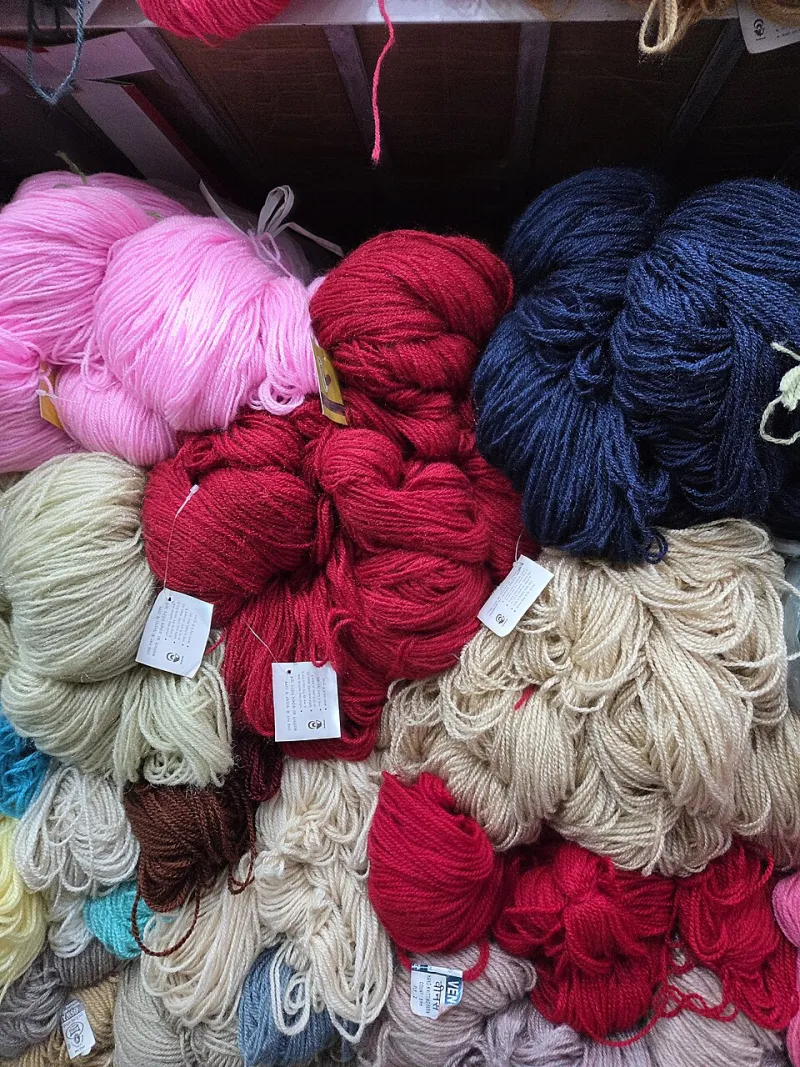
Photo: Gannu03, CC BY-SA 4.0, via Wikimedia Commons
The van arrives at ten past nine, just as the frost is thinking about leaving the grass. It is a converted transit, painted a deep indigo, with a hand-painted sign on the side that reads The Rolling Skein. Inside, shelves are bolted to the walls, loaded with skeins in every shade from undyed ecru to a bracken brown that looks like it was lifted straight from the fell behind the village hall. Ruth, the shopkeeper, has been on the road since half seven. She has already done one stop at a farm gate and sold three balls of aran to a woman who flagged her down with a crook. Now she is setting out a folding table of oddments, a basket of buttons, and a tin of biscuits. The tea urn is on.
This is a Saturday morning on the wool round. Mobile yarn shops are not new, but they have quietly multiplied since the pandemic reminded us how much we miss the small, unglamorous rituals of buying wool in person. The internet is brilliant for browsing at midnight, but it cannot let you squeeze a skein. It cannot tell you that the light in a village hall makes a certain green look grey, or that the woman next to you has knitted the same jumper three times and knows exactly where the sleeve cap goes wrong. A travelling shop can.
The Route Is the Shop
Ruth plans her route by postcode and by memory. Tuesdays are the northern villages; Thursdays she heads west; Saturdays are the long loop through the Dales, starting at a village hall, then a farmyard, then a market square. She has been doing this run for six years, and she knows which stops need an early start, which ones have parking for a van, and which ones will offer her a cup of tea before she has even opened the back doors.
‘You can’t build a route from a spreadsheet,’ she says, sorting a box of British wool sock yarn. ‘You build it from who asks you to come back. And from who leaves a note on the gate saying they’ve run out of a certain dye lot.’
Her stock is deliberately smaller than a shop’s. She carries what she can fit on the shelves and what she can lift. But that constraint is also a kind of curation. There is no wall of fifty identical balls. There are oddments, mill seconds, a handful of skeins from a small flock in Cumbria, and a box of buttons that look like they were dug out of a grandmother’s sewing tin. Because she cannot stock everything, she has to choose well. And because she comes back every week, she can order something in for the next visit. That is a different kind of service to a website’s next-day dispatch. It is slower, and strangely more personal.
What the Van Carries That a Website Can’t
The obvious answer is touch. Wool is a tactile thing. You need to know if a yarn is itchy, if it blooms when you knit it, if it has the kind of spring that will hold a cable. But the less obvious answer is conversation. A mobile shop turns up in a place where there might not be a knitting group, or where the knitting group meets once a month in a cold church room. For an hour, the van becomes the knitting circle. People bring their projects. They ask questions. They show off a finished hat. They complain about a pattern. Ruth listens, and remembers.
‘I know who is knitting what, and roughly how far along they are,’ she says. ‘That’s not creepy, it’s just village life. If someone’s stuck, they’ll wait for the next Saturday. That’s the whole point.’
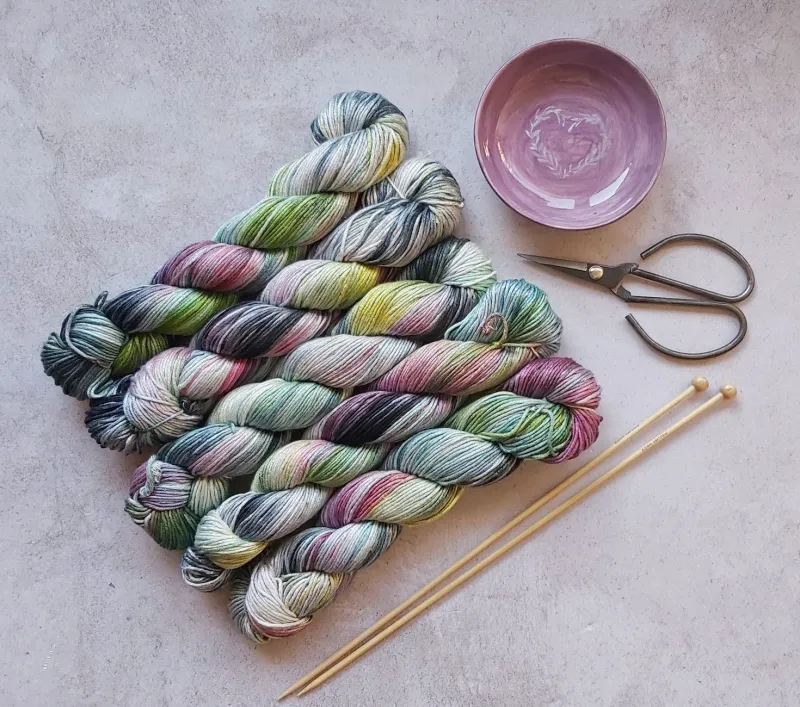
She also carries sample garments. A child’s cardigan in a soft Bluefaced Leicester, a pair of gloves with a tricky thumb, a shawl that shows how a variegated yarn behaves when it is knitted up. You can try them on for size. You can see the drape. That is the sort of thing a photograph on a website can only hint at.
And then there is the daylight. British winter light is a moving target. A colourway that looks lovely on a screen can turn out to be too yellow in a north-facing kitchen. In the van, you can take a skein to the door and hold it up against the sky. Ruth says she sells more grey-blue every January because of this simple act.
A Morning on the Round
By quarter past nine, the village hall has filled up. Mrs Pattinson is first in, carrying a half-finished sock and a question about heel turns. Then a young couple who have just moved to the area and are looking for something to knit while they wait for broadband to be installed. Then a farmer’s wife who buys four skeins of aran for a jumper she will probably start in February and finish in November. The tea urn bubbles. The biscuits go quickly.
At half ten, Ruth packs up the hall and drives fifteen minutes to a farm gate, where a woman in wellies is waiting with a list. She has brought a sample of her own handspun so Ruth can match a contrast colour. They stand in the cold and compare skeins for ten minutes. The woman leaves with two balls and a plan.
The last stop is a market square in a small town. Ruth parks near the war memorial and opens the side door. A man who has been knitting for fifty years tells her she is the only shop that stocks the particular grey he likes. She laughs and says she will bring more next week. It is not a hard sell. It is a conversation that happens to involve wool.
A Practical Checklist for a Wool-Bus Visit
If you have never been to a mobile yarn shop, a little preparation goes a long way.
Before you go
- Check the route and timetable. Most vans post their weekly stops on social media or a simple website, often with a WhatsApp number for updates. Weather can change things.
- Know your project. Bring a pattern, a swatch, or a photograph of what you want to make. Ruth says a screenshot of a jumper is worth ten minutes of vague description.
- Bring a sample of the yarn you are trying to match, even a small tail. Screens lie; tails rarely do.
- Make a list of questions. Gauge, fibre content, dye lots, washability. The van is not a library, but it is a good place to ask.
- Bring cash as well as a card. Some mobile shops are card-only, but a few still prefer notes, especially on rural routes with patchy signal.
On the day
- Arrive early if you want the best choice. Odd balls and mill seconds do not hang around.
- Squeeze everything. Hold it to the light. Drape it over your wrist.
- Ask about dye lots. If you are buying multiple skeins, check they match, or plan a project that celebrates the difference.
- Ask what is coming next week. Ruth often carries a notebook with requests. If you need something, she can order it.
- Talk to the person next to you. That is half the point of the van.
After the visit
- Wind your yarn before you put it away. It is easier to do it now than to untangle a skein in a black dog mood in January.
- Note the dyer and the shade name. If you love it, you will want to remember it.
- Tell the shopkeeper if you liked something. They are running a business, but they are also doing the rounds in all weathers, and a bit of feedback is welcome.
Why the Van Matters
The mobile yarn shop is not a nostalgia project. It is a practical response to a real problem: rural high streets have lost a lot of shops, and the ones that remain cannot always stock the specific wool you want. A travelling shop stitches together a scattered community. It brings colour to a village hall on a grey Saturday. It lets a knitter in a remote farmhouse buy a single skein without paying postage, and it lets a beginner ask a stupid question without feeling stupid.
As the van pulls away from the market square, Ruth waves at the man with the grey jumper. ‘Same time next week,’ she calls. The van disappears around the bend, a small indigo shape against the brown of the winter hedges. The tea urn is cold again. But somewhere up the dale, a pair of needles is already clicking.