Measure, Wear, Repeat: The Case for a Working Tension Square
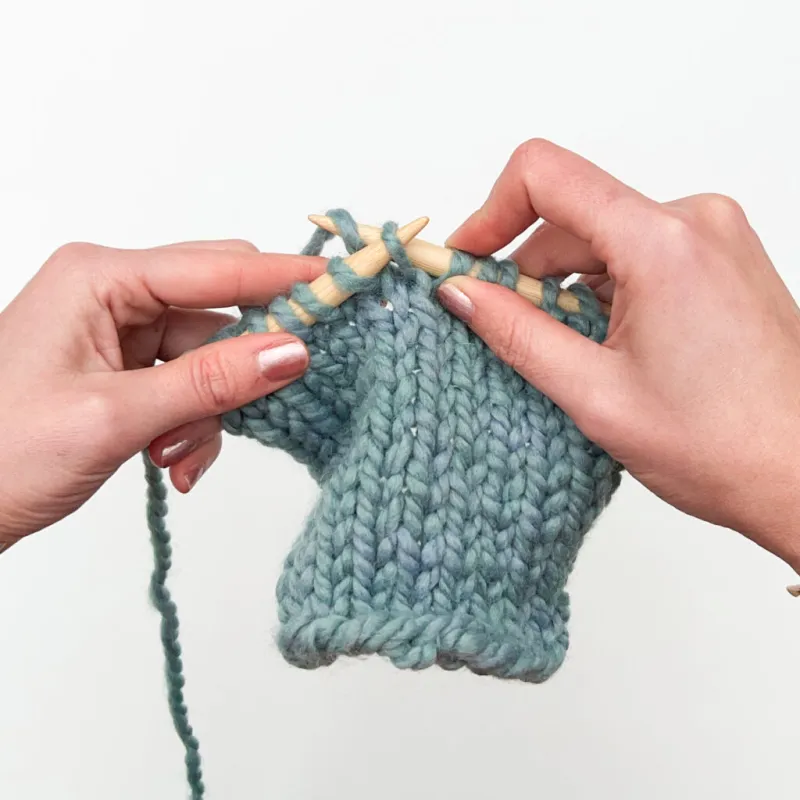
Photo: knitting tension swatch British wool hat wrist warmers flat lay, via knitting.com
There is a particular kind of guilt that lives in a knitter’s drawer. It is square, roughly ten centimetres by ten, and it was knitted with good intentions. You made it to check tension. You measured it once, maybe twice. Then you put it away, because what else do you do with a small stiff square of British wool that has already done its job?
I would like to make a quiet case for the working tension square: a swatch knitted bigger than the pattern asks, with a second life already in mind. Not a careless swatch, and not an excuse to skip measuring. Quite the opposite. A swatch with a future earns its keep twice over — once as information, and once as something warm.
Why knit more than ten centimetres?
A ten-centimetre square tells you how many stitches and rows you have in ten centimetres. That is useful, but it is also a very small piece of evidence. It does not show you how the fabric hangs after twenty minutes on your lap. It does not show you what happens after a wool wash. It does not tell you whether the yarn will bloom, sag, tighten or soften against your skin.
A larger swatch does. If you are knitting a jumper in a worsted-spun British wool, cast on enough for a generous rectangle — say twenty-five centimetres wide and fifteen deep. Work it in the stitch pattern the pattern uses, or in stocking stitch if that is the main fabric. Bind off loosely, measure it flat, then let it hang over the back of a chair for a day. You will learn more from that hanging rectangle than from three tidy little squares.
And if you plan the size well, that rectangle can become a pair of wrist warmers, a pocket lining, or the brim of a simple hat. The wool has not been wasted. It has been promoted.
What a swatch can tell you — and what it cannot
A swatch can tell you whether your needles are giving you the fabric the designer intended. It can tell you whether the yarn feels pleasant at the tension you need. It can show you whether the colour pools, whether the stitch definition disappears, and whether the wool is likely to irritate your neck.
What it cannot tell you is how the whole garment will behave. A jumper is heavier than a swatch. Its weight pulls downwards. That is why a flat measurement can look perfect and a finished sleeve can still grow by the end of the day. This is not a failure of your swatching; it is a limit of the method. Measure flat, then measure hanging, and note the difference.
Washing matters too. Many British wools change after their first bath. Some bloom and fill out, making a slightly loose tension look suddenly right. Others relax and drop. Soak your swatch the way you plan to wash the finished thing — cool water, a wool-friendly wash, no wringing — then dry it flat and measure again. That post-wash number is the one I trust most.
And if you knit a second swatch, do not be surprised if it is more honest than the first. The first square is often knitted with a bit of performance in your hands. The second is knitted the way you actually knit when the kettle is on and the radio is talking. The second square lies less.
A small seasonal plan for test squares
Autumn and winter are good months for this approach, because the things you make from a generous swatch are things you can wear straight away.
The swatch cap
If you are planning a jumper, cast on a hat’s worth of stitches in the same yarn at the same tension. Knit twelve to fifteen centimetres in the round, measure the fabric, wash it, and measure again. If the tension is right, carry on and finish the hat. You have checked your gauge and made a hat in one go. If the tension is off, you have still learned something before you commit to a jumper’s worth of wool. A hat is a small enough experiment to frog without heartbreak, and a finished one is never unwelcome.
The wrist warmer pair
Knit two rectangles roughly fifteen centimetres by twenty in the main stitch pattern. Seam the long edges, leaving a gap for the thumb, and you have a pair of wrist warmers. They are ideal for trying a new wool next to the skin, and they give you a clear record of how the yarn softens with wear.
The pocket lining
A twelve-centimetre square in plain stocking stitch makes a kind pocket lining for a coat or a cardigan. It is a small, hidden use for a swatch that has already done its measuring work. No one will see it, but your hands will feel the difference on a cold morning.
Keep a ledger, not a pile
A drawer of unlabelled squares teaches you nothing after a month. A small notebook does. For each working swatch, note the yarn, the shade, the needle size, the pre-wash tension, the post-wash tension, and one sentence about how the fabric feels. Add what you made from it, if anything.
My own ledger has entries like: a Bluefaced Leicester aran that bloomed after washing and became a soft, generous hat; a Romney sport that tightened half a stitch and made excellent firm wrist warmers; a Shetland laceweight that opened up so much after blocking that the pocket lining became a delicate little bag. None of these notes are dramatic. Together they are a map of how British wools behave in my hands.
The point is not perfect tension
The point is to stop treating tension as a test you pass or fail. It is a conversation with the yarn. A bigger swatch gives the yarn more room to answer. And when that swatch becomes a hat, a wrist warmer or a hidden pocket lining, the conversation leaves the drawer and goes out into the weather.
So next time a pattern asks for a ten-centimetre square, cast on a little more. Measure it honestly. Wash it kindly. Then make something small and useful from the evidence. The wool was never wasted. It was only waiting for a second job.