A Little Off-Kilter: The Quiet Joy of Mill Shop Yarn Seconds
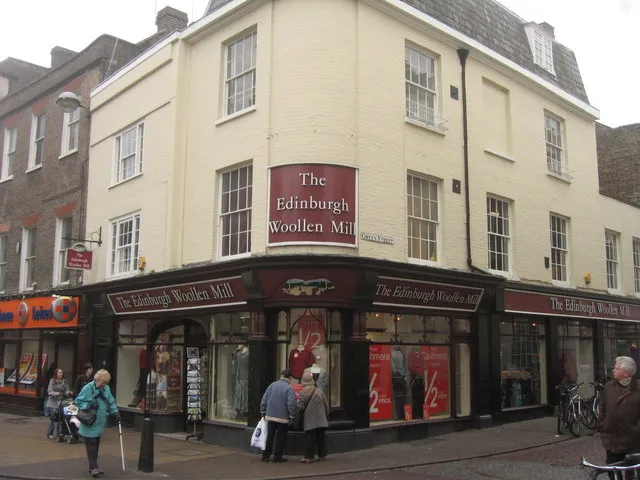
Photo: Sebastian Ballard, CC BY-SA 2.0, via Wikimedia Commons
On a wet November afternoon, the mill shop at the end of a long stone building smells of lanolin and tea. By the door is the basket everyone pretends not to make a beeline for: SECONDS, ODDMENTS, END OF RUN. Inside, the skeins are slightly squashed, a bit mismatched, and utterly compelling. One is a shade darker than its neighbour. Another has a tiny slub running through it like a secret. These are not the sad leftovers of the yarn world. They are the pieces with a bit of grit and a story, and they deserve better than being saved for a project you do not really love.
What a second actually is
Mills grade yarn for consistency. First-quality skeins are expected to match in thickness, twist and colour, especially within a dye lot. A second is a skein that missed one of those marks. It might have a slightly thicker patch, a thin spot, a knot where a new end was joined, or a shade that sits a fraction away from the rest of the run. An odd lot might be a small quantity left over from a mill run, or a sample dye batch that never went into full production. None of that automatically makes the yarn weak or unpleasant to knit. It simply means the mill would rather sell it honestly as a second than pretend it is something it is not.
That honesty is worth paying attention to. A mill shop is not a bargain bin in disguise; it is a place where you can buy British-made yarn with a bit of visible history. The variation is part of the cloth you are about to make. Slow fashion is not about pretending everything is perfect. It is about knowing what you have, working with it, and making something that lasts.
The three-minute skein check
A little inspection goes a long way. Hold the skein up to the shop light, then near a window if you can. You are looking for breaks, very thin places, felted patches or stray knots. A few slubs are usually harmless, and a single join in a skein is not the end of the world, but you want to know about it before you cast on. Squeeze the skein gently. Good wool should feel springy, not brittle or dry. If it crackles or feels rough in a way that suggests harsh storage, put it back.
Compare two skeins side by side. Colour can shift under shop lighting, so check near daylight if possible. A slight tonal difference is often lovely in stripes or colourwork, but it matters if you are knitting a fitted garment where you need a seamless match. Check the weight on the label and, if the shop has scales, ask whether the skein has been weighed. A few grams either way is normal in an odd lot; a big difference is worth questioning.
Questions for the shop floor
Mill shop staff often know exactly why a skein was graded down, and they are usually happy to tell you. Ask why it is a second. Is it a thickness issue, a dye shift, a join, or simply the end of a run? Ask whether the skeins in the basket come from the same dye lot, and whether there are more of the same colour out the back. If you are buying several, ask if you can wind one to check for breaks. If you are planning a garment, ask what they would knit with it. The person behind the counter has probably seen that yarn knitted up a dozen times, and their answer is worth more than any label.
A good question to keep in your pocket is: what is the variation likely to do in the stitch pattern? A slightly thick-and-thin yarn can look wonderful in garter stitch or a simple rib, where texture is the point. It can be less happy in fine lace, where every irregularity shows. A dye-shift skein can shine in a striped shawl or a colourwork yoke, but it may annoy you in a plain stocking-stitch sleeve where you wanted an even block of colour.
Projects that suit a wonky skein
This is where the seconds basket earns its keep. Simple accessories are ideal: cowls, mitts, hats, scarves and small shawls. Texture-led stitches are forgiving and flattering. Think garter stitch, linen stitch, broken rib, or a simple slip-stitch pattern. If you have several odd skeins in related shades, stripes are your friend. A striped hat or blanket square turns variation into design rather than a flaw.
For garments, use seconds with a little thought. A slightly uneven skein can work beautifully as a contrast colour in a yoke, or in a garment where you are already planning to mix dye lots. Avoid using a single odd skein for a whole fitted jumper unless you have enough of the same run and you are happy with the chance of subtle shifts. For high-wear areas, such as sock heels or elbows, keep your strongest, most consistent yarn. Save the characterful skein for the cuff, the colourwork band, or the shawl you will actually wear.
The point is not to treat seconds as a lesser yarn for a lesser pattern. It is to match the yarn to the right pattern. A beautiful textured shawl, a favourite hat, a pair of mitts for the school run: these are good patterns, and they will carry a little variation with grace.
The slow-fashion case for imperfect wool
Buying a mill second is a small act of waste reduction. It keeps good fibre in use, supports the shops that sell it, and gives you a yarn with a bit of local character. It also asks something of you as a maker: to look closely, to ask questions, and to choose a pattern that works with the yarn rather than against it. That is not a compromise. It is the quiet craft of knowing your materials.
Next time you see a basket of oddments by the mill shop door, do not walk past it. Pick up a skein. Hold it to the light. Ask the person behind the counter what they would make. Then take it home and cast on something you will genuinely love. A slightly wonky skein does not need to be hidden. It needs the right pair of hands, a little attention, and a pattern that lets its character show.