A Day Pass, Six Shop Doors: Riding the Marches Line with My Needles
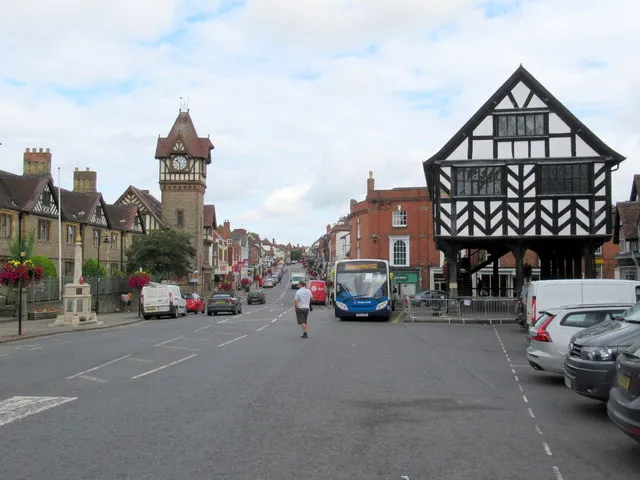
Photo: Roy Hughes , CC BY-SA 2.0, via Wikimedia Commons
There is a particular joy in a train ticket that does not ask you to be anywhere urgently. My plan for a recent Saturday was simple: buy an off-peak day return, pack a small knitting project, and get off at every market town along one stretch of the Marches Line. The aim was not to buy everything. It was to meet six independent shops, support a few high streets, and remember that a yarn crawl can be as much about the spaces between shops as the shelves inside them.
The Marches Line runs through some of the loveliest border country in the UK, linking Shrewsbury, Church Stretton, Craven Arms, Ludlow, Leominster and Hereford. The trains are not fast. That is the point. With a return ticket and a relaxed attitude to timetables, you can build a day that feels like a small holiday.
The route at a glance
Start at Shrewsbury and work south, or flip it if you live nearer Hereford. An off-peak day return keeps things simple, and a railcard helps if you have one. Check train times the night before, because Sunday services are different and engineering works happen. Pack light: a folding project bag, a small notions tin, a water bottle and a shopper that folds flat. Wear comfortable shoes. Market towns are made for wandering.
Stop one: Shrewsbury — The Shuttle and Skein
Shrewsbury is the kind of town where you can lose an hour in the lanes before you even reach the yarn. The Shuttle and Skein sits in a converted shop with wooden floors and a wall of British wool. The owner was winding a skein when I arrived and did not rush me. I bought a single ball ofundy DK for a pair of mitts and asked for a recommendation for a beginner sock yarn. The answer came with a story about a local spinner, which is exactly what you want.
Before getting back on the train, walk down to the market and buy something for later. A pasty, a bun, an apple. Yarn crawls are hungry work.
Stop two: Church Stretton — Little Stretton Wool Co.
Church Stretton feels like a deep breath. The shop is small, bright and full of natural shades, with a table for sitting and a kettle that seems to be permanently on. I sat for twenty minutes with a cup of tea and a woman knitting a gansey-style jumper in a dirty cream wool. Nobody asked me to buy anything. That is the best kind of shop.
If you have time, take a short walk towards the hills before your train. Even ten minutes of fresh air resets the eyes for the next round of colour choices.
Stop three: Craven Arms — The Fleece & Fern
Craven Arms is a proper stop-off town, and The Fleece & Fern makes the most of it. There are baskets of oddments by the door, a shelf of second-hand knitting books, and a noticeboard full of local groups. I picked up a vintage pattern leaflet for 50p and a skein of recycled wool in a mossy green. The shop also runs a mending circle on Thursday evenings, which feels like the sort of thing every high street could use.
From here, a short bus hop or a brisk walk can take you towards Ludlow if you prefer to stretch your legs. Otherwise, stay on the train and enjoy the view.
Stop four: Ludlow — Ludlow Yarn Parlour
Ludlow is busy in the best way: market stalls, old buildings, and a yarn shop that feels like a parlour in the nicest sense. There are armchairs, sample garments to squish, and a good selection of local breed wool. I spent a happy age comparing two grey skeins before choosing the one with a bit more halo. The person behind the counter understood the dilemma completely.
This is also a good stop for a proper lunch. Sit down, take your time, and knit a few rows while you wait. Nobody in Ludlow will mind.
Stop five: Leominster — Hedgehog Yarns
Leominster’s shop is a treasure chest of colour. Hedgehog Yarns leans towards hand-dyed skeins and small-batch brands, with a table of mini skeins for advent-style projects. I resisted the tiny skeins for at least four minutes. Then I bought three. The shopkeeper laughed and said that was a record.
There is something lovely about a shop that lets you be silly about colour. I left with a small paper bag and a renewed urge to cast on something striped.
Stop six: Hereford — The Mule & Needle
Hereford is the final stop and a good place to end. The Mule & Needle is roomy, with a long table for workshops and a wall of books. I bought a set of stitch markers and a skein of local wool to make a hat for my dad. The owner told me about a Saturday morning knit group that meets in the back room. If I lived closer, I would be there every week.
By the time I got back on the train, my bag was heavier and my head was full of ideas. I had spent less than I feared and seen more than I expected.
Knitting on the move
Train knitting needs to be simple. Choose a project with a short repeat: socks, a hat in the round, a garter-stitch scarf, a blanket square. Avoid anything that needs a chart spread across your lap or a long circular needle that wants to escape under the seat. Use a project bag with a zip, keep a small tin for stitch markers and tapestry needles, and skip the tiny scissors if you are worried about security. A yarn cutter pendant is handy and less dramatic.
If you are a nervous traveller, sit facing the direction of travel and keep your elbows in. A lifeline in lace is a good idea. So is a spare needle, just in case. And do not try to wind a skein on a moving train unless you enjoy chaos.
A few practical notes
Check opening hours before you go. Independent shops often close on Mondays, and some shut early on Saturdays. Buy something small at each stop if you can, even if it is just a ball band or a cup of tea, because high streets survive on small, regular kindnesses. Ask before taking photos. Carry a reusable bag. And leave room in your rucksack for the journey home.
The best thing about a yarn crawl by rail is that it slows you down. You cannot dash from shop to shop. You have to wait for the train, walk the high street, and sit with your purchases. By the time you get home, the day has already become a story — and the yarn has a place to begin.