When the Light Goes Early: A Knitter's Guide to Winter Colour
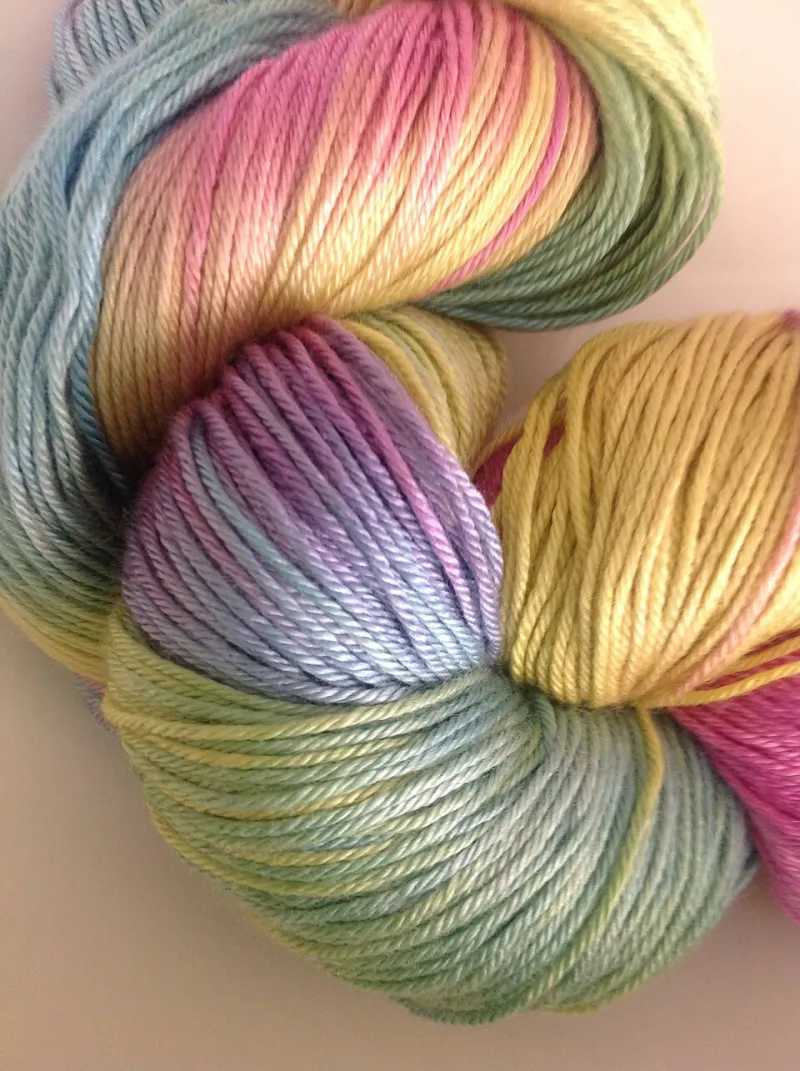
Photo: Knittytwins, CC BY-SA 3.0, via Wikimedia Commons
By the first week of November, light in a British kitchen becomes a scarce resource. The clocks have gone back, the sun clocks off before the kettle has boiled twice, and the skein of rust-coloured DK that looked so certain on a laptop screen last night now resembles something you might find at the back of a cupboard. This is not a failure of taste. It is a failure of daylight, and it happens to most of us every year.
The good news is that you do not need a studio, a colourimeter or a degree in textile chemistry to work out what a yarn will actually do in your hands. You need a window, a lamp, a mug of something hot and the willingness to look at the same skein three or four times in a single day. Think of it as a slow audition, with the yarn doing all the work.
Your north-facing window is the honest one
North light gets a bad reputation in this country, largely because we associate it with grey skies and the sort of drizzle that ruins a dog walk. For colour assessment, though, it is the closest thing to a neutral referee. South-facing light flatters everything; it warms browns, lifts blues and makes even a muddy olive look like it has been on holiday. North light is blunter. It will tell you, quite kindly, that your 'soft sage' is actually a bit acid.
I like to lay three or four candidate skeins on the windowsill, still in their bands, and leave them there while I get on with something else. Come back after twenty minutes and the ones that have gone flat or dull were probably always going to disappoint in a jumper. The ones that still have a bit of life in them, even under a November sky, are usually the keepers.
Morning, noon and the golden hour that never quite arrives
A yarn changes through the day more than we give it credit for. At nine in the morning, under a low white sky, a deep teal can look almost black. By noon, if the cloud breaks, it might show a greenish streak you had not noticed. And by half past three, when the light turns that peculiar blue-grey, everything red-based seems to glow while everything yellow-based quietly gives up.
This matters most if you are knitting something you will actually wear in winter, which is to say: in the dark. A jumper that looks marvellous at midday in July may look like a puddle in February. Try holding the skein against a dark coat and against a pale wall. Try it near a window at four o'clock and see whether the colour still has enough contrast to be interesting when the light is doing its worst.
The tea-break lamp test
Here is the trick that has saved me more than one online purchase: put the yarn under the lamp you actually use in the evening, not the brightest one in the house. Mine is a slightly warm, slightly old-fashioned reading lamp with a linen shade, and it is brutally honest about grey. Cool greys go faintly lilac under it; warm greys go beige. Neither is wrong, but you want to know which you are getting before you knit four inches of ribbing.
A word on undertones, because they are the quiet troublemakers of winter colourwork. Two yarns can both be described as 'blue' and still fight each other on the needles, one leaning green and the other leaning purple. Lay them side by side, squint gently, then look away and look back. If one seems to jump forward while the other recedes, they will probably read as a deliberate contrast. If they blend into a single fuzzy mass, you have your answer.
Contrast you can actually see
Colourwork in low light is where plenty of beautiful plans fall apart. A pale pink and a pale blue that look charming on a mood board can turn into a single milky blur by the fire. Before committing to a hat or a yoke, take a photo of the two yarns together and switch your phone to black and white. If the shades sit at different points on the grey scale, the pattern will read. If they do not, it will not, however lovely the colours are in real life.
Photographing for Ravelry and Instagram without the fib
We all do it: snap a skein in the garden on a bright day in June and post it with the caption 'colour is most accurate in the first photo'. It is not, really. It is accurate to a bright day in June. If you are sharing a project or reviewing a yarn online, try to include one shot in flat, ordinary daylight and one in the evening under a normal lamp. Mention the difference. Other knitters will thank you, and your future self will too when you are trying to remember why that jumper looked so different in person.
The November kitchen truth
In the end, the most useful colour test is not a test at all. It is simply paying attention. That skein on the windowsill, the one you keep glancing at while the tea goes cold, is telling you something. Maybe it is warmer than you expected. Maybe it is bolder, or quieter, or a little too close to the colour of the wall. Whatever it says, believe it. The winter is long, the days are short, and the yarn you choose now will be keeping you company until the clocks go forward again.